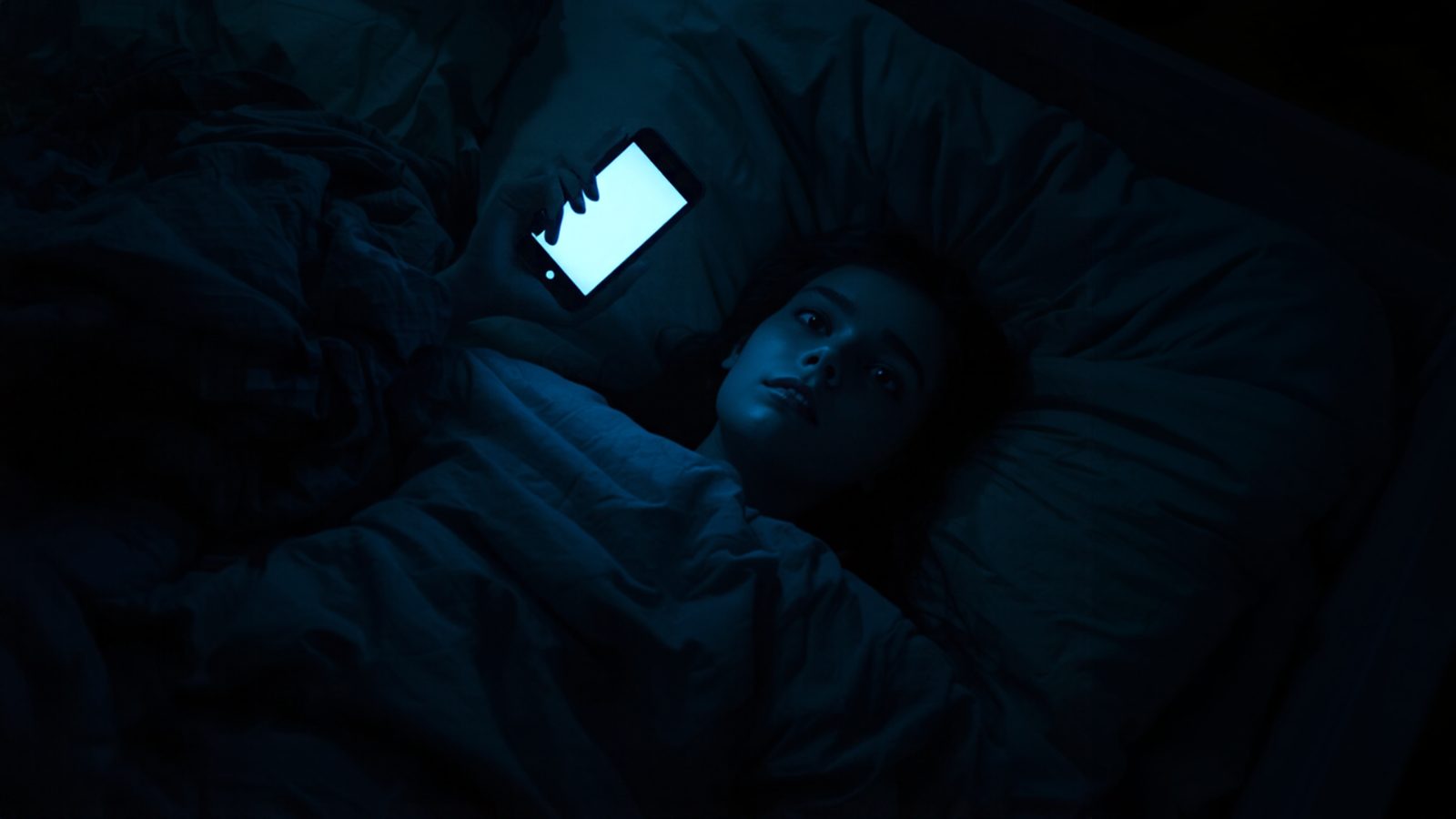
Most parents already suspect the phone is part of why their teenager is hard to wake up. Studies have backed that up for years, but most of them relied on teens reporting their own screen time and sleep, which isn't very reliable. A study published this week in JAMA Pediatrics took a different approach. It recorded actual phone activity and tracker-measured sleep across thousands of nights, then compared each teen with themselves. The result points to a fairly specific window where phone use seems to matter most: after 10 p.m., and especially the last few minutes before falling asleep.
How the study worked
The paper, published online October 19, 2026, comes from Yihong Zhao, Lauren Hale, and Dimitri Christakis. Christakis is a professor of general pediatrics at Seattle Children's Research Institute. The team drew on the Adolescent Brain Cognitive Development (ABCD) Study, a large, long-running U.S. project following children's brain development into adulthood.
They focused on 425 participants, average age 14.8 and about half girls, who used Android phones and had at least two weeks of overlapping data. Phone activity was logged passively by app data, so nobody had to estimate their own screen time. Sleep was measured with a Fitbit. Altogether the team had 7,591 nights of data, collected between late 2020 and early 2024.
The key design choice was comparing each teen with their own usual pattern. Instead of asking whether heavy phone users sleep worse than light users (which mixes in many other differences between kids), the researchers asked whether the same teen slept differently on nights when they used their phone later than usual. That helps rule out stable traits like personality, household rules, or being a natural night owl.
What they found
- Late nights on the phone meant later, shorter sleep. On nights when a teen's phone use after 10 p.m. ran above their own average, they fell asleep roughly 65 minutes later and slept about 20 minutes less overall.
- The link scaled minute by minute. After adjusting for other factors, each extra minute of phone use after 10 p.m. was tied to falling asleep about 0.87 minutes later, waking about 0.37 minutes later, and losing about 0.43 minutes of total sleep. By our rough math, an extra half hour of scrolling works out to falling asleep around 25 minutes later and losing about 13 minutes of sleep.
- Later cutoffs looked worse. The researchers tested cutoffs every hour from 8 p.m. to midnight, and the estimated effect grew steadily the later the use happened.
- The final minutes mattered for waking up during the night. Phone use in the last five minutes before sleep was linked to more time awake after first dozing off, mostly within the first half hour. When the researchers looked at the wider 20-minute window before sleep, that link became negligible.
The waking-up figure sounds small (under a minute of extra wakefulness per minute of last-second use), but it fits a familiar pattern. A teen who's still on their phone right up until sleep is more likely to drift off lightly, surface again, and possibly pick the phone back up.
Why 10 p.m. matters so much for teens
Teenagers aren't just staying up out of stubbornness. During puberty the body clock naturally shifts later, so many teens don't feel sleepy until 11 p.m. or beyond. School start times don't shift with it. The American Academy of Sleep Medicine recommends 8 to 10 hours of sleep a night for 13- to 18-year-olds, and with an early alarm, every minute lost at the start of the night comes straight out of that total.
That's why the later sleep onset in this study is the more important finding. Wake time moved later by less than half as much as sleep onset did, which is what you'd expect when school sets the alarm. On a school night, a later bedtime can't be made up in the morning.
Dr. Daniel Bigman, a child and adolescent psychiatrist and sleep medicine physician at Northwell Health who wasn't involved in the research, told HealthDay that phones likely work against sleep in a few ways at once. Scrolling simply pushes bedtime later. Social media, videos, and notifications keep the brain alert. And screen light is itself a signal to the body clock that it's still daytime. (We cover that last mechanism in more depth in our guide to how blue light affects your sleep.) He also noted that broken-up sleep in teens shows up as poorer attention, irritability, low mood, and weaker impulse control, which is consistent with what's known about sleep loss and the developing brain.
Building a school-night schedule that actually fits?
Our free Sleep Schedule Builder works backward from a required wake-up time to suggest a realistic wind-down and bedtime. It's a useful starting point for a family conversation about when the phone goes away.
What the study can't tell us
- It shows a link, not proof of cause. The within-person design is stronger than most screen-time research, but it's still observational. Some of the effect could run the other way: a teen who can't fall asleep may reach for the phone, not the other way around.
- Only Android users were included. The passive app tracking required Android phones, so iPhone users aren't represented, and the sample may not reflect all teens.
- Fitbits aren't sleep labs. Consumer trackers estimate sleep from movement and heart rate. They're reasonably good at timing when sleep starts and ends, but less precise about brief awakenings.
- Other research finds smaller effects. Not every study of daily screen use finds a strong effect on total sleep time. Results depend on how and when screen use is measured, which is part of why this study's focus on timing is useful.
Practical steps for families
- Aim for a 10 p.m. phone cutoff on school nights. That's where the study saw the effect start to add up. If 10 p.m. isn't realistic yet, any move earlier than your teen's current habit is a step in the right direction.
- Protect the last few minutes before sleep. Even if phones are used in the evening, having it put away before lights out appears to matter for staying asleep.
- Charge phones outside the bedroom. It removes the temptation to check notifications at midnight and solves the "just one more video" problem without a nightly argument.
- Offer something to replace it, rather than just a rule. Bigman advised against threatening to confiscate phones and suggested calmer alternatives such as reading, music, stretching, or relaxation exercises. Our sleep hygiene tips have more ideas for a wind-down routine.
- Model it. Teens notice when the household rule only applies to them. A shared device curfew is easier to keep.
Key takeaways
- A JAMA Pediatrics study of 425 teens and nearly 7,600 nights paired phone activity logs with Fitbit sleep data.
- On nights with more phone use after 10 p.m. than usual, teens fell asleep about an hour later and slept about 20 minutes less.
- The later the phone use, the stronger the link, and use in the final five minutes before sleep was tied to more waking in the first half hour of the night.
- The findings are observational, but they give families a concrete target: phones away by 10 p.m., and never right up until sleep.
Screen-time advice is usually about total hours, which is hard to measure and harder to enforce. This study suggests that when the phone gets used may matter more than how much, for sleep at least. For most families, a clear evening cutoff and a phone that sleeps in the kitchen is an easier rule to keep than a daily time limit.
Source: Medical Xpress (HealthDay) — "Smartphones are wrecking teens' sleep, study indicates," October 21, 2026, https://medicalxpress.com/news/2026-10-smartphones-teens.html. Study: Zhao Y., Hale L., Christakis D., "Evening Phone Use and Sleep Outcomes Among Youth," JAMA Pediatrics, published online October 19, 2026, doi:10.1001/jamapediatrics.2026.4902.
Medical disclaimer: This article is for informational purposes only and does not constitute medical advice. If your child has ongoing trouble falling or staying asleep, persistent daytime sleepiness, or changes in mood or school performance, talk to their pediatrician or a sleep specialist.
About Better Night Sleep: Better Night Sleep is an independent sleep-education and product-research resource. Our articles are written and edited by the Better Night Sleep editorial team using reputable public sources and established sleep-health recommendations. Learn more about us.